EHS environmental health and safety professional solution provider
Metallurgical Industry
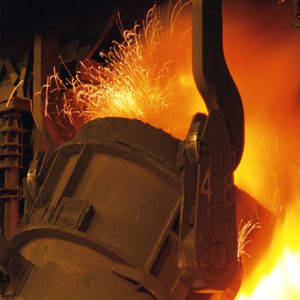
The metallurgical industry can be broadly divided into two main operational areas: primary metal production and secondary metal production. Primary metal production mainly refers to the extraction of metals or metal compounds from ores. Secondary metal production encompasses the production of alloy ingots and the recycling of metals from scrap, using a range of processing techniques to create metal materials with specific properties.
The metallurgical industry can be divided into the following sectors according to the products they produce: the ferrous metallurgical industry (i.e. the steel industry), the non-ferrous metallurgical industry, the rare metal metallurgical industry and the powder metallurgical industry.
CASE 1.
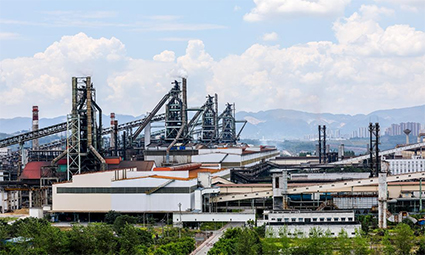
Steel Plant
(China. Qingdao)
Pain Points:
The metallurgical industry can be broadly divided into two main operational areas: primary metal production and secondary metal production. The term ‘primary metal production’ is used to describe the process of extracting metals or metal compounds from ores. Secondary metal production encompasses the production of alloy ingots and the recycling of metals from scrap, using a range of processing techniques to create metal materials with specific properties.
The metallurgical industry can be divided into the following sectors according to the products they produce: the ferrous metallurgical industry (i.e. the steel industry), the non-ferrous metallurgical industry, the rare metal metallurgical industry and the powder metallurgical industry.
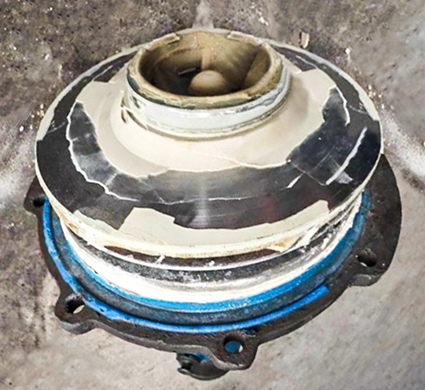
Following the implementation of Tradome technology on the equipment for a period of two months, the scale thickness reached approximately 1mm, accompanied by enhanced hardness and viscosity, and a notable reduction in scale adhesion. A proportion of the scale exhibited natural shedding, and the water pump cleaning cycle was extended to a minimum of one month.
Summarize
TETRADOM quantum ring increases the concentration ratio of circulating water, allowing the equipment to operate normally in high-hardness environments. The direct effect of descaling is to increase heat exchange efficiency and save energy, while also reducing emissions, saving water resources and protecting the environment.
CASE 2.
Steel Plant
(ChongQing,China)
The main issues that need to be addressed are as follows:
The project is situated in the city of Chongqing.
The circulating cooling water system has a circulation volume of 1,450 cubic metres per hour.
The facility has a water retention volume of 600m³.
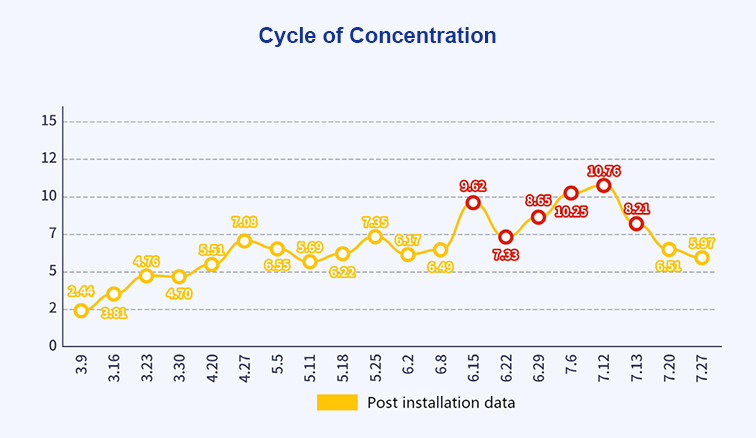
The project is notable for its high concentration ratio of existing circulating water, reaching 7.74 times.
The water supply source is tap water, and the circulating water system is subject to a three-year repair cycle. Chemical methods are employed to treat the circulating water, and bactericides and corrosion and scale inhibitors are used to control water quality.
Installation:
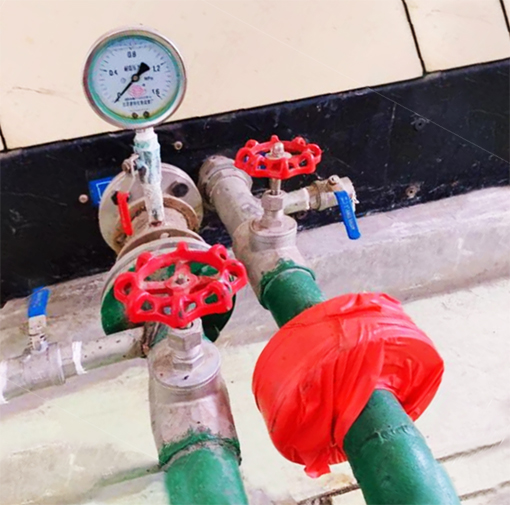
The quantum ring should be installed in the cold water inlet pipe of the air compressor.
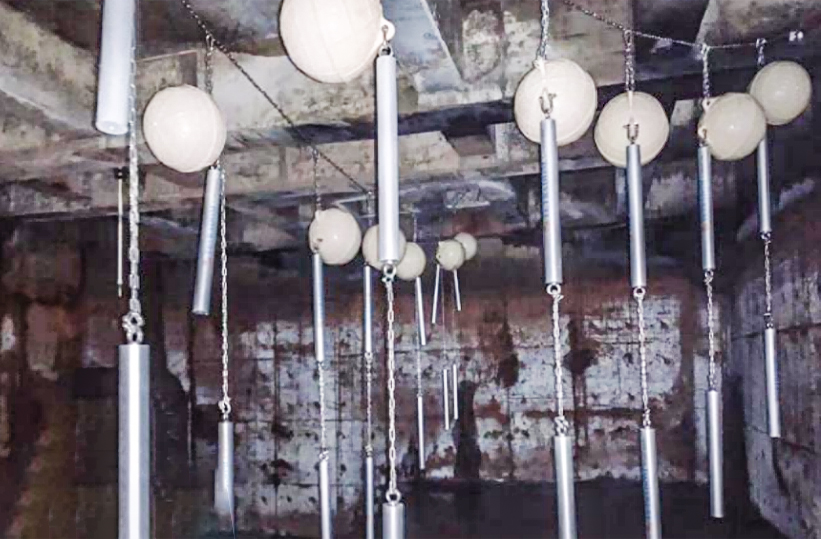
The next step is to install the immersed quantum rods in the closed circulation reservoir.
Effect of Use:
In March 2022, TETRADOM quantum ring technology was implemented in the reservoir and air compressor circulating cooling water system. Following the installation, the addition of corrosion and scale inhibitors and bactericides was discontinued.
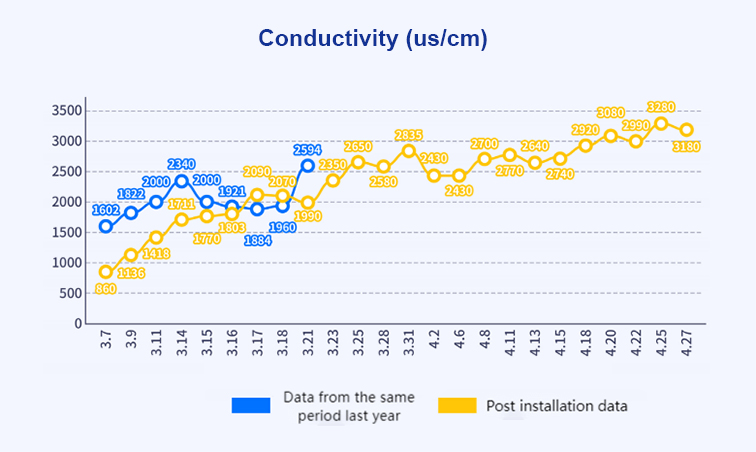
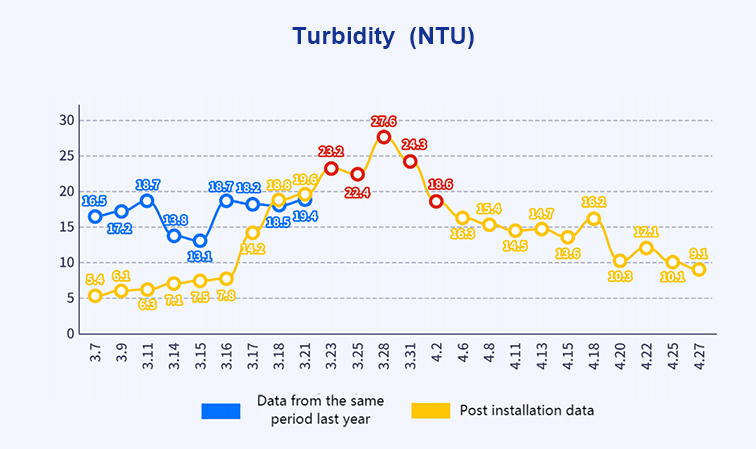
Inspection carried out on 8 July 2022. The air compressor heat exchanger showed no signs of scaling. Statistical analysis indicates a notable increase in concentration rates compared to the same period in previous years, accompanied by a significant change in the quality of circulating cooling water. Two months after the technology was applied, the scale dissolved in the water flow and turned into granular powdery substances, which were discharged out of the system through sewage. Please refer to the attached document for further details.
Summarize
TETERADOM quantum device is designed to protect and clean oil production equipment and pipelines, and is suitable for deployment in challenging environments. This innovative technology enables the circulating water to function optimally even in high concentration ratio environments, a capability that sets it apart from other water treatment methods. The quantity of supplementary water is diminished, and there is no subsequent maintenance, which curtails the cost of manual upkeep.

_01-724x1024.png)
_02-724x1024.png)